

Designing the Perfect Rustic Farmhouse Kitchen Island
Table of Contents
In today’s kitchens, the island is more than just a functional feature—it’s the heart of the room, a gathering place, a prep zone, and often, a style centerpiece. If you’re drawn to the cozy charm of farmhouse aesthetics but crave a touch of rugged beauty, the rustic farmhouse kitchen island offers the perfect blend of warmth, character, and practicality. Whether you’re renovating a countryside cottage or infusing rustic elegance into a modern space, your island design sets the tone for your entire kitchen.
This article walks you through everything you need to consider when designing a rustic farmhouse kitchen island—from choosing reclaimed wood surfaces and antique finishes to maximizing storage with vintage-inspired charm. We’ll explore trending styles, practical layouts, and must-have features to help you create a space that feels both timeless and highly livable. With visuals and detailed tips included, you’ll find the inspiration you need to make your kitchen island a true rustic showpiece.
Choosing the Right Materials for Rustic Farmhouse Style
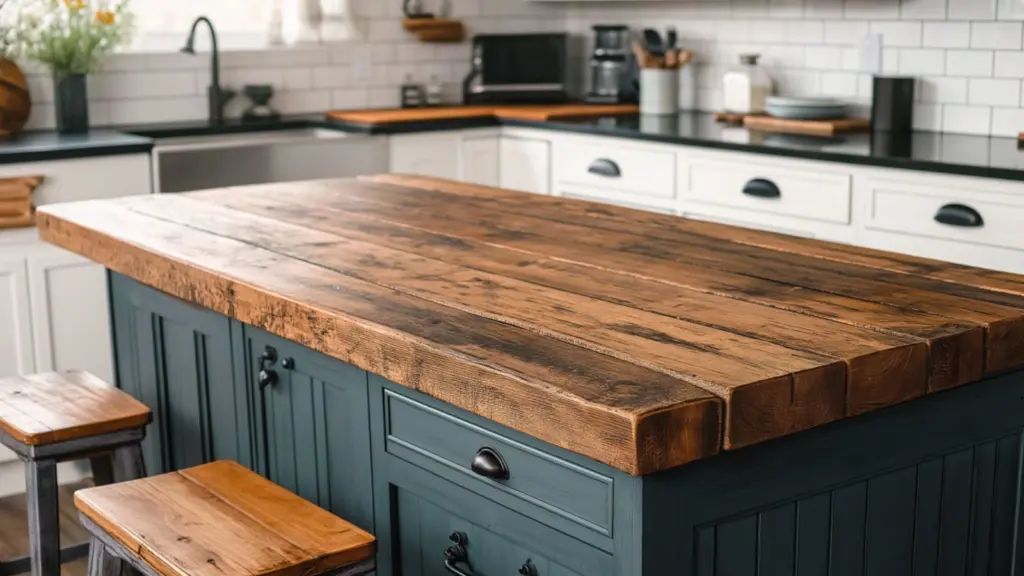
Material choice is fundamental to achieving a true rustic farmhouse kitchen island. The goal is to embrace authenticity, texture, and natural imperfections that bring character and warmth to your space. Reclaimed wood is a favorite material in farmhouse kitchens—it tells a story and offers a worn-in look that’s hard to replicate with new materials.
Other great options include butcher block countertops for warmth and durability, stone or soapstone for a rugged surface, and shiplap or beadboard panels to wrap the island in a rustic texture. When it comes to hardware, black wrought iron, aged bronze, or brushed nickel are all excellent fits for this design style.
Incorporating handcrafted or handmade elements also adds authenticity. From hand-scraped wooden finishes to exposed joinery and visible nail marks, these details offer a lived-in, timeless feel that is central to the farmhouse charm.
Material Comparison Table – Rustic Kitchen Island Essentials
| Material | Benefits | Rustic Appeal Level |
|---|---|---|
| Reclaimed Wood | Eco-friendly, full of character | ★★★★★ |
| Butcher Block | Warm tone, easy to maintain | ★★★★☆ |
| Soapstone Countertop | Natural matte finish, dark veining | ★★★★☆ |
| Shiplap Paneling | Adds texture and farmhouse detail | ★★★★★ |
Incorporating Functional Storage with Rustic Flair
A well-designed kitchen island isn’t just about aesthetics—it should also enhance the functionality of your space. In a rustic farmhouse kitchen, this means finding creative ways to introduce ample storage while keeping the vintage charm intact.
Start with open shelving made from distressed wood or repurposed crates to display mixing bowls, cookbooks, or woven baskets. These shelves invite guests to grab what they need, while also showcasing your personality and practical items. Add built-in drawers with cup pulls in antique brass, and consider a tilt-out trash cabinet hidden behind a paneled door for modern-day convenience.
For even more functionality, incorporate extra-deep drawers for pots and pans, pull-out spice racks, or built-in wine storage. Many farmhouse islands also feature towel bars or butcher block extensions that double as prep surfaces and casual dining spots.
The beauty of a rustic farmhouse island is in its ability to marry old-world charm with modern utility. Whether you thrift vintage hardware or retrofit an antique cabinet base, don’t be afraid to mix practicality with patina.
Functional Add-On Table – Smart Rustic Island Features
| Feature | Description |
|---|---|
| Open Wood Shelving | Keeps everyday items visible and within reach |
| Deep Storage Drawers | Perfect for heavy cookware, dishes, or baking pans |
| Built-in Wine Rack | Adds rustic charm and utility for entertainers |
| Hidden Trash/Recycling | Maintains aesthetic flow while keeping things tidy |
Selecting the Ideal Island Layout for Your Kitchen Size
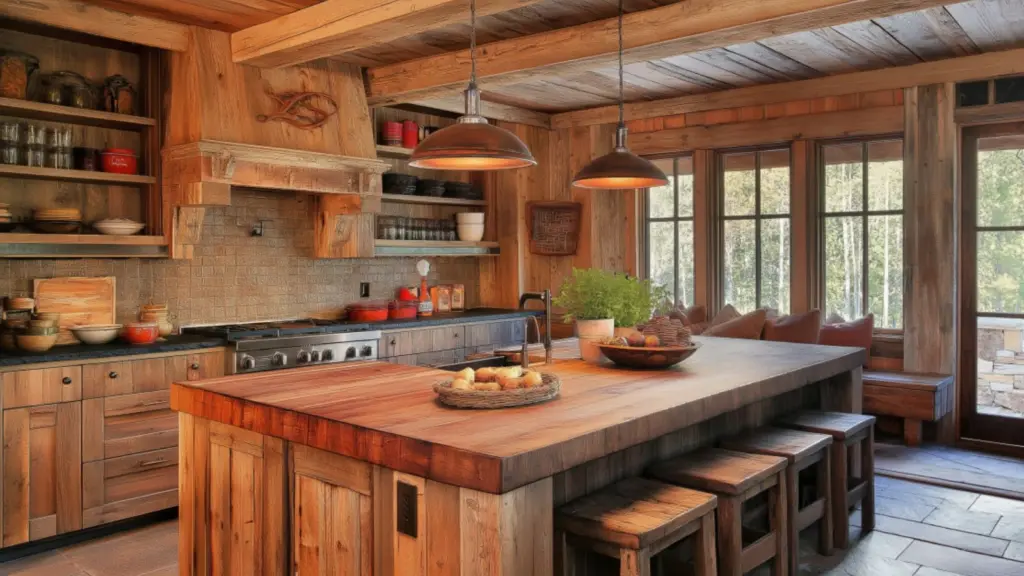
The size and layout of your kitchen island should suit the flow of your space. For smaller kitchens, a narrow rectangular island with storage on one side can keep things functional without overwhelming the room. For larger kitchens, a square or L-shaped island may offer more work surface and integrated seating.
Farmhouse kitchens typically favor wide islands that allow for multiple work zones: chopping, mixing, serving, and socializing. If your kitchen is open concept, consider using the island to visually divide the cooking area from the dining or living space. Incorporating overhangs for bar stools or even a breakfast nook at one end enhances versatility.
It’s also important to allow proper clearance around the island—ideally 36 to 48 inches on all sides—to ensure comfort and ease of movement. A rustic island should invite family and guests to linger, not crowd the space.
Island Layout Guide – Choosing Based on Kitchen Size
| Kitchen Size | Recommended Island Style | Key Benefits |
|---|---|---|
| Small (Under 150 sq ft) | Slim island with wheels or butcher block | Space-saving, mobile, multifunctional |
| Medium (150–300 sq ft) | Standard rectangular island | Balanced storage and work area |
| Large (300+ sq ft) | L-shaped or multi-level with seating | Room for prep, dining, and decor |
Adding a Touch of Vintage with Repurposed Furniture
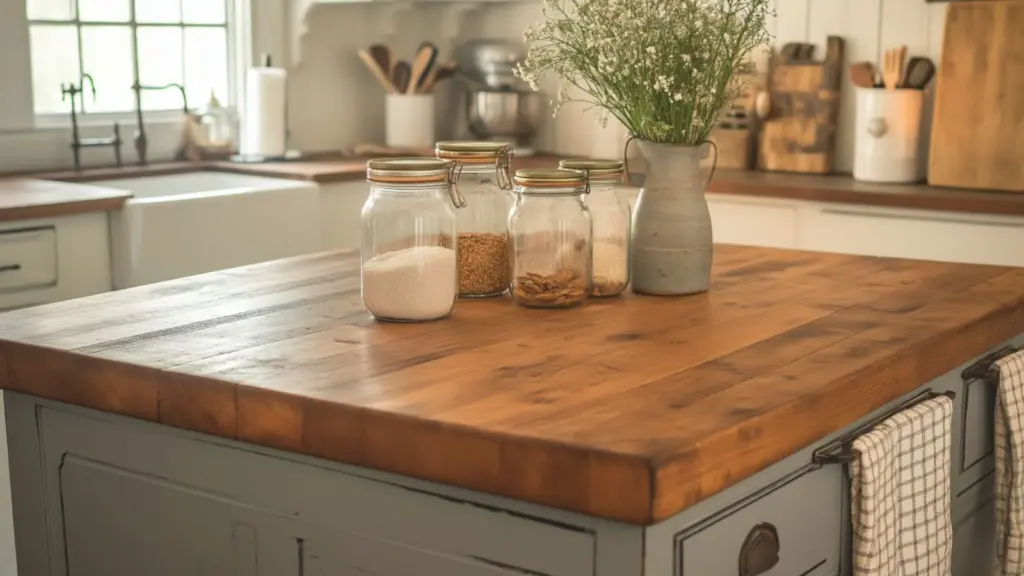
One of the most charming trends in rustic farmhouse kitchens is transforming vintage furniture into a kitchen island. An old dresser, butcher’s table, or antique workbench can be repurposed into a one-of-a-kind centerpiece. These pieces often come with built-in character—scratches, patina, and a story that new furniture just can’t match.
Refinishing the top with butcher block or marble gives it new life, while keeping the original legs and framework intact preserves its authenticity. Add casters for mobility, or swap out knobs for vintage brass or ceramic pulls to match your kitchen’s aesthetic.
Not only does this approach add sustainability to your design, but it also ensures that your kitchen island will be truly unique. You’ll gain functionality without sacrificing charm.
Repurposing Checklist – Converting Furniture into an Island
| Furniture Type | Needed Modifications | Benefits |
|---|---|---|
| Vintage Dresser | Remove top, add butcher block surface | Built-in drawers, compact structure |
| Old Workbench | Sand, seal, add under-shelf or towel bar | Sturdy and spacious |
| Antique Table | Raise height with legs or casters | Elegant and lightweight |
Lighting the Island for Atmosphere and Functionality
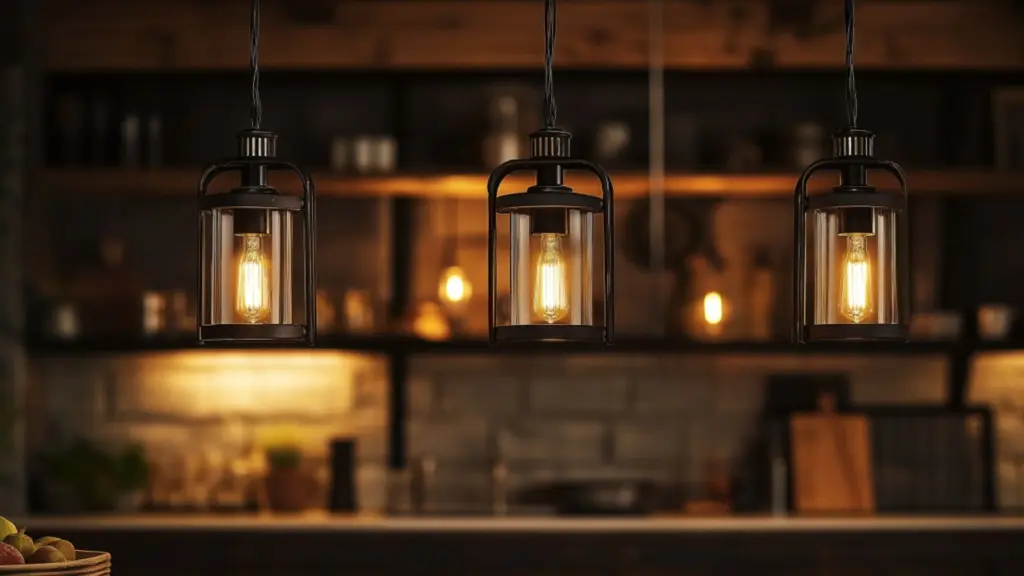
Lighting plays a key role in showcasing your rustic farmhouse kitchen island while also making it practical. The right fixture can instantly anchor the space, define its purpose, and enhance its charm.
Pendant lights are a classic choice. Opt for lantern-style pendants in wrought iron, metal dome shades with a distressed finish, or even glass jars turned into hanging lights for a DIY approach. The goal is to combine form and function—lights that illuminate your prep zone while adding vintage or industrial flair.
Consider the number and spacing of fixtures. Typically, two to three pendants evenly spaced above the island work well. Use dimmable bulbs to adjust ambiance from bright task lighting during meal prep to a soft glow for evening gatherings.
For additional layers of light, under-cabinet strips on the island base or sconces on adjacent walls create a cohesive and well-lit space.
Lighting Style Table – Best Fixtures for Rustic Islands
| Lighting Type | Design Style | Ideal Placement |
|---|---|---|
| Metal Dome Pendants | Industrial Farmhouse | Above island center |
| Lantern-Style Lights | Traditional Rustic | Pairs well with darker wood tones |
| Mason Jar Pendants | DIY Cottage Charm | Adds warmth and character |
Blending Color and Texture for a Cohesive Farmhouse Look
Color plays a vital role in pulling together your rustic farmhouse island design. While natural wood tones dominate, don’t shy away from adding color through paint or stains. Muted tones like sage green, slate blue, or creamy whites can enhance the rustic aesthetic while softening the overall look.
Layering textures is another important aspect. Combine rough-hewn wood with smooth countertops, woven baskets, ceramic bowls, or linen tea towels. Textures give your island depth and tactile appeal, making it feel as lived-in as it looks.
If your kitchen includes modern elements like stainless steel appliances, use your island to introduce warmth and contrast. Mixing materials like stone, wood, and metal is a hallmark of farmhouse style done right.
Color & Texture Matrix – Building Visual Harmony
| Element | Suggested Approach | Visual Impact |
|---|---|---|
| Island Base | Painted sage or distressed wood | Soft contrast, grounding effect |
| Countertop | Butcher block or stone slab | Natural and tactile feel |
| Decor Accents | Woven baskets, ceramic dishware | Adds charm and usability |
Conclusion
Designing the perfect rustic farmhouse kitchen island is a creative process that combines tradition with function. From choosing materials rich with history to incorporating smart storage and vintage elements, every detail contributes to a warm and welcoming space. Whether you’re starting from scratch or updating an existing island, these ideas help create a kitchen that feels grounded, beautiful, and genuinely lived-in—exactly what the farmhouse spirit is all about.